service projects
A major national science and technology infrastructure project "Meridian Chain of Comprehensive Monitoring of the Space Environment and Foundation in the Eastern Hemisphere"(referred to as the "Meridian Project")
China Academy of Sciences-European Space Agency joint space science satellite mission "Solar Wind-Magnetosphere Interaction Panoramic Imaging Satellite Program (SMILE)"
Special project for comprehensive investigation and assessment of the environment in the north and south poles
Key Project of the National Natural Science Foundation of China-"Research on Characteristics of Polar Ionospheric Convection Based on SuperDARN"
National Key Basic Research and Development Plan (973 Plan) topics
--"Research on the instability of polar ice sheets and its impact on global sea level"
--"Research on the Physical Process and Modeling of Magnetosphere-Ionosphere Coupling"
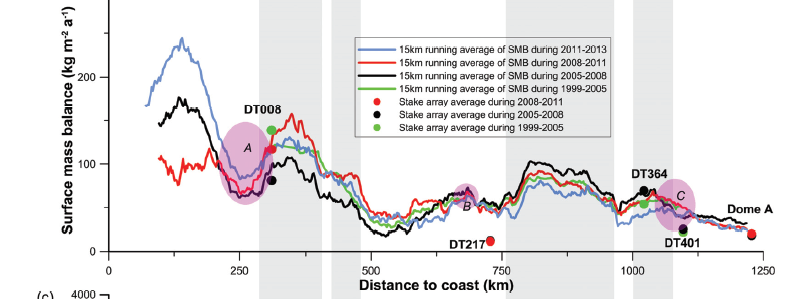
** Main scientific research results: ** Material balance on the surface of the ice sheet
Changes in the material balance along the route from Zhongshan Station to Dome A over the years. According to about 150 kilometers from Zhongshan Station, the accumulation rate of surface matter is the largest.
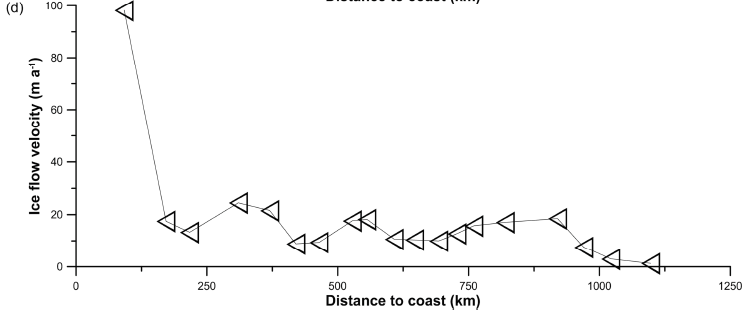
Glaciers flow, and the closer they are to the coast, the greater the flow
** Main scientific research results: ** Geospace environment (1)
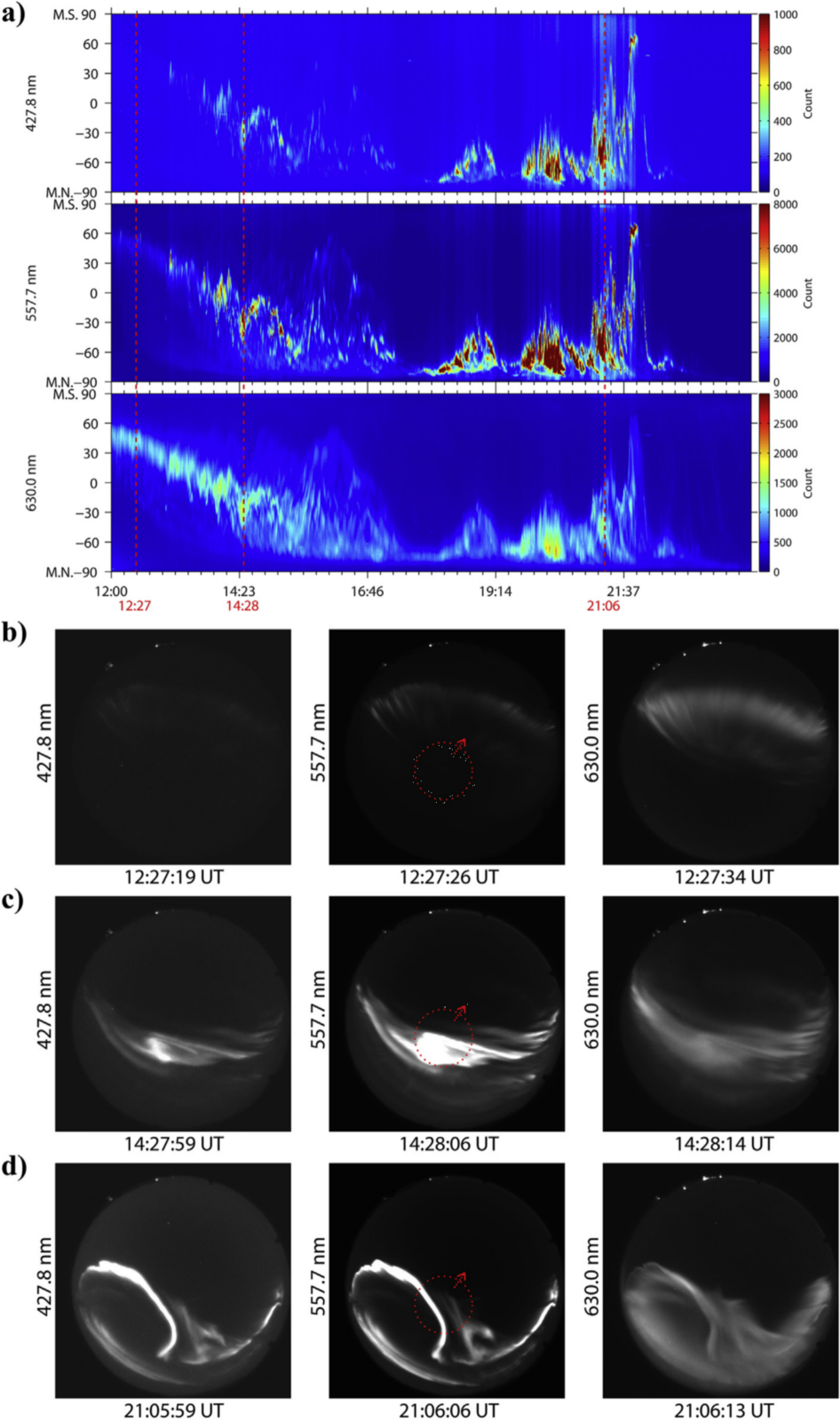
** Multi-wavelength and multi-scale aurora observations at Zhongshan Station:**1. This paper reviews the diverse aurora observation methods and latest results at Zhongshan Station. 2. At the same time, the scientific observations and research results of the cosmic noise receiver are introduced.
** Main scientific research results: ** Geospace environment (2)
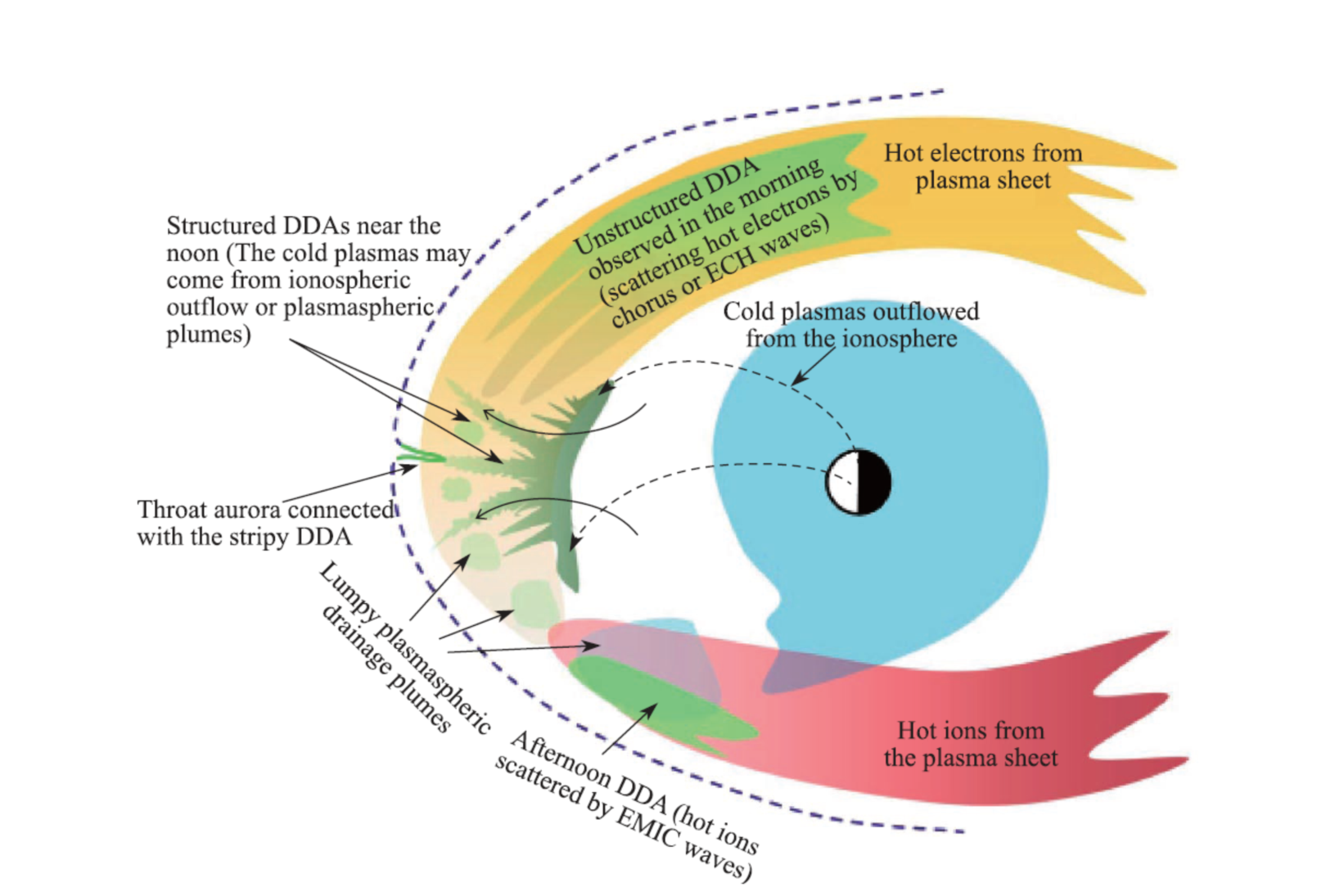
** Review article: Progress in high-altitude atmospheric physics in the polar regions of China **: This article introduces the latest progress in ground-based observations of high-altitude atmospheric physics in the polar regions of China in the past five years. The main content covers research on polar ionospheric dynamics, aurora and particle deposition, polar plasma convection, geomagnetic fluctuations and plasma waves; the observation equipment and content of the five stations are introduced in detail.