The first comprehensive mercury dataset on the Qinghai-Tibet Plateau was released at the National Cryosphere Desert Scientific Data Center
Recently, the research result"Mercury dataset over the Third Pole" byresearcher Kang Shichang's team of the National Key Laboratory of Cryosphere Science and Frozen Soil Engineering of the Northwest Institute of Ecology, Environmental Resources, China Academy of Sciences was published in the international authoritative data journal "Earth System Science Data". Its associated dataset"Mercury Dataset of the Third Pole Region (2010 - 2023)" was shared and published in the National Cryosphere Desert Scientific Data Center. The dataset is open to access, and scientific researchers are welcome to download and use the data.
Research background
The cryosphere is widely developed on the Qinghai-Tibet Plateau and is highly sensitive to global climate change and human activity disturbances. Cross-border mercury imports from the surrounding areas of the plateau, historical "secondary release" of mercury caused by the accelerated melting of the cryosphere, and unique bioaccumulation and amplification effects in the plateau aquatic ecosystem are superimposed on each other, making the research on the mercury cycle in the Qinghai-Tibet Plateau Not only It has become a global biogeochemical frontier hotspot, but also an urgent and practical need to assess plateau ecological security.
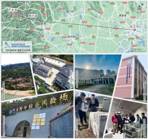
Kang Shichang's research team, in conjunction with the Institute of Qinghai-Tibet Plateau of China Academy of Sciences, Shanxi University, Tajikistan Academy of Sciences, Lanzhou University and other scientific research units, and relying on the Collaborative Monitoring Network for Atmospheric Pollutants and Cryospheric Change (APCC), carried out long-term research on the mercury biogeochemical cycle in the Qinghai-Tibet Plateau and surrounding areas, forming the region's first multi-environmental-medium comprehensive mercury data set. This dataset fills a key gap in global mercury cycle research in the third pole region and provides irreplaceable observational evidence for understanding the long-distance transmission mechanism of global mercury pollution.
Introduction to Data Set
Based on the APCC collaborative monitoring network, the third pole regional mercury data set systematically compiles mercury concentrations, fluxes and isotope data from eight environmental media: atmosphere, aerosols, precipitation, glaciers, soil, surface water, ice cores and lake cores on the Qinghai-Tibet Plateau and surrounding areas., covering 9 subsets, 9 stations and 12 glaciers, 50 soil sample points and 53 surface water points . The data is stored in the National Glacier, Frozen Soil and Desert Scientific Data Center (DOI: 10.12072/ncdc.qzkk.db6654.2024 ) and is open and shared by CC BY 4.0. It provides key basic data support for cross-border mercury pollution transmission, cryosphere mercury release risk assessment and global mercury cycle model verification.
The data set is obtained through online observation by the instrument or experimental analysis after sample collection, specifically including:
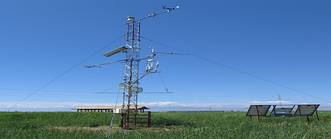
Atmospheric mercury : Online monitoring of gaseous total mercury at Namtso Station (4730 m) and Tanggula Station (5050 m)
Aerosol mercury : particulate mercury data from 9 stations
Precipitation mercury : Total mercury and methylmercury data in precipitation at 16 stations
Glacier mercury : 12 glacier snow craters, surface snow and ice dust samples
Soil mercury : 585 samples from 50 sample points
Surface water mercury : 919 samples from 53 points
Ice core mercury : Historical record of the 147-meter ice core of the Ganglong Jiama Glacier
Lake core mercury : chronological sequence of 8 sedimentary pillars
Mercury isotope : stable mercury isotope composition of aerosols, soil, and sediments
Core scientific discoveries
Cross-border mercury pollution in South Asia is transported inland to the Qinghai-Tibet Plateau
Mercury isotope tracing confirms that atmospheric mercury can transport northward across the Himalayas to the Tanggula Mountains. Soil mercury (72 ng/g) and lake core sediment fluxes (112.1 μg/m²·year) on the southern slope are about 1.7 times and 8 times that of the northern slope (43 ng/g, 14.6 μg/m²·year), respectively.
Human activities continue to affect mercury deposition on plateau
The ice core record presents three stages: stable background before the Industrial Revolution → initial growth at the end of the 19th century → accelerated accumulation after World War II, with flux jumping from 0.28 to 0.91 μg/m²·year, reflecting the continued impact of anthropogenic emissions in South Asia.
Aerosol mercury has significant spatial differentiation characteristics
The Kathmandu Valley (850.5 pg/m³) is one of the highest in the world; the Taklimakan sand-dust year carries about 59.7 tons of mercury; the average in Lhasa is 224 pg/m³, which is equivalent to that of heavily polluted cities in China.
Precipitation mercury shows a "westerly-monsoon" climate range differentiation
The concentration is high and the grain size is dominant in the westerly region; the flux is greater in the monsoon region. Medog Station (56.3 ng/L, 84.7 μg/m²·year) is one of the highest reported values in the world.
Paper Information
Kang, S., Huang, J., Zhang, Q., Guo, J., Yin, X., Sun, S., Sun, X., Tripathee, L., Abdullaev, S., Tang, W., Zhang, Y., Miao, X., Liao, L., and Che, L.: Mercury dataset over the Third Pole, Earth Syst. Sci. Data, 18, 4943–4963, 2026,https://doi.org/10.5194/essd-18-4943-2026
Data Reference
Kang Shichang, Huang Jie, Zhang Qianggong, Guo Junming, Yin Xiufeng, Sun Shiwei, Sun Xuejun. Third Pole Mercury Data Set (2010 - 2023). National Glacier, Frozen Soil and Desert Scientific Data Center, 2024. https://cstr.cn/CSTR:11738.11.NCDC.QZKK.DB6654.2024
Kang Shichang, Huang Jie, Zhang Qianggong, Guo Junming, Yin Xiufeng, Sun Shiwei, Sun Xuejun. Third Pole Mercury Data Set (2010 - 2023). National Glacier, Frozen Soil and Desert Scientific Data Center, 2024. https://www.doi.org/10.12072/ncdc.qzkk.db6654.2024